
South Pasadena Voter Lookup Steps
Begin with the LA County Voter Registration Verification tool. It checks a resident’s own voter registration against four facts. Enter the residence house number without turning it into a full street-address search. The form is designed to answer whether the supplied person and address details match a registration record. It does not expose a list of nearby voters or let a visitor browse by surname.
| Lookup Field | Input | Needed | County Format |
|---|---|---|---|
| Last Name | Text | Yes | Up to 30 characters |
| Birthdate | Date text | Yes | MM/DD/YYYY |
| House Number | Text | Yes | Residence house number, up to 15 characters |
| Zip Code | Text | Yes | Up to 10 characters |
| Search / Reset | Buttons | Search only | Submit the check or clear the form |
Use the spelling and residence data held by the elections office. If a move or name change has not yet been reflected, contact the county rather than trying other people’s personal details. South Pasadena city-election questions can also be directed to the City Clerk at (626) 403-7230.
Read South Pasadena Voter Status
California My Voter Status is the statewide alternative. A voter can use it to confirm registration status, the registered name and political party preference, and language preference. It can also report vote-by-mail or provisional-ballot status, identify a vote center or polling place, show upcoming elections, and provide the county election office contact.
The state portal asks for personal identifying information through a dynamic form. Those checks help make the service a self-lookup. They do not convert the voter roll into a public name index. A status such as active, inactive, or cancelled is an election-administration field, so a voter who sees an unexpected result should ask Los Angeles County to review the record.
The state My Voter Status screen shows where Californians begin the check.
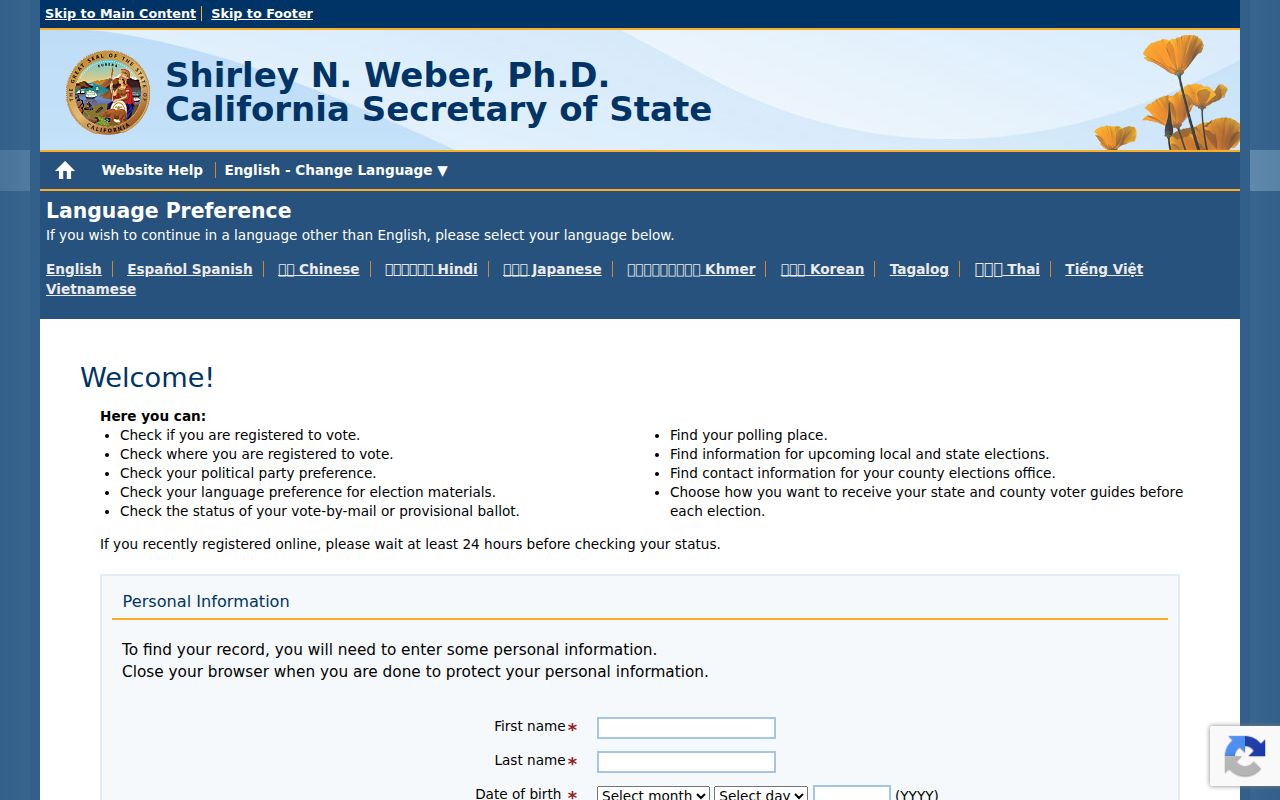
Its personal sign-in design reinforces the key limit: status verification is not a search of all South Pasadena voters.
South Pasadena Voter Record Fields
A California voter record can hold far more than a personal status screen displays. Elections staff use names, contact addresses, registration dates, precincts, districts, status, and participation data to administer elections. Party preference is part of the record. Participation history may show whether a voter cast a ballot in an election, but never how that person voted.
| Name | Confirms the voter in a self-lookup; available in files only for approved uses |
|---|---|
| Residence and mailing addresses | Subject to statutory file limits and protected-address rules |
| Party preference | Shown to the voter through My Voter Status |
| Status and registration date | Election details, including active, inactive, or cancelled status |
| Precinct and districts | May appear in election data and maps |
| Participation history | May record that a ballot was cast, never the voter’s selections |
California keeps key data confidential. Under Elections Code § 2194, driver license or state ID numbers, Social Security numbers, unique voter identifiers, signatures, and protected contact data are not disclosed. Full birthdate is also restricted.
The California Public Records Act text illustrates the broader state access framework.
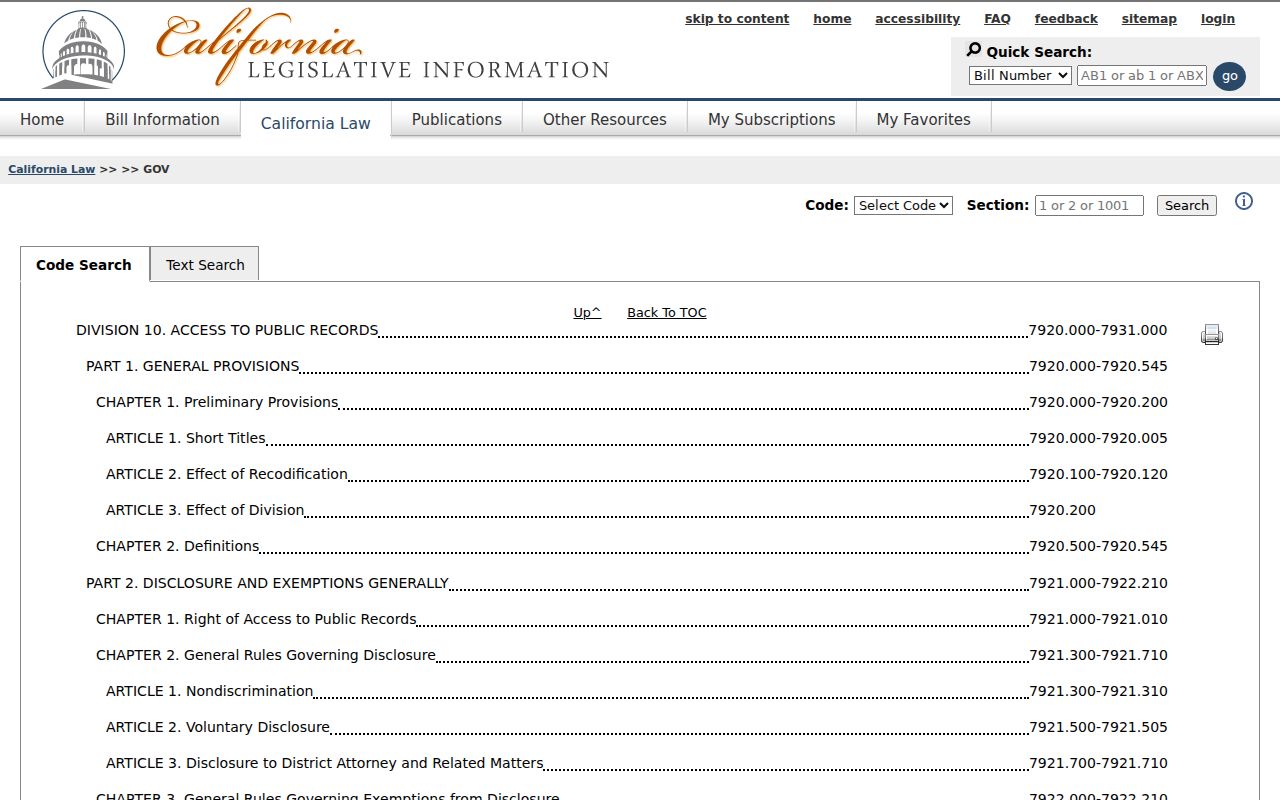
Voter data still follows the narrower Elections Code rules even when another government record might be open under the general act.
Request South Pasadena Voter Files
A broader file is not released for casual personal, private, or commercial use. California permits voter registration information for election, scholarly, journalistic, political, or governmental purposes, as determined by the Secretary of State. Eligible applicants must state precisely what data they seek and why the purpose fits the law.
- Read the Secretary of State file-request rules and choose the exact voter data or maps needed.
- Complete the voter file application with the applicant’s name, address, identification number, intended use, and organization details when applicable.
- Sign the use and security certification. Mail the application to Secretary of State, 1500 11th Street, 5th Floor, Sacramento, CA 95814.
- Do not email or fax the form. The application states that those submission methods are not accepted.
The state retains applications for five years. Elections Code § 2188 requires the request to identify the applicant, requested information, intended use, and related organization. The form also asks whether the request covers a full file, a specific voter, or maps and related data. An applicant acting for another person or group must identify that relationship. These fields let the state evaluate both the scope and the claimed purpose before any release, and the file must remain within the certified purpose.
The official request page summarizes both eligibility and confidentiality.
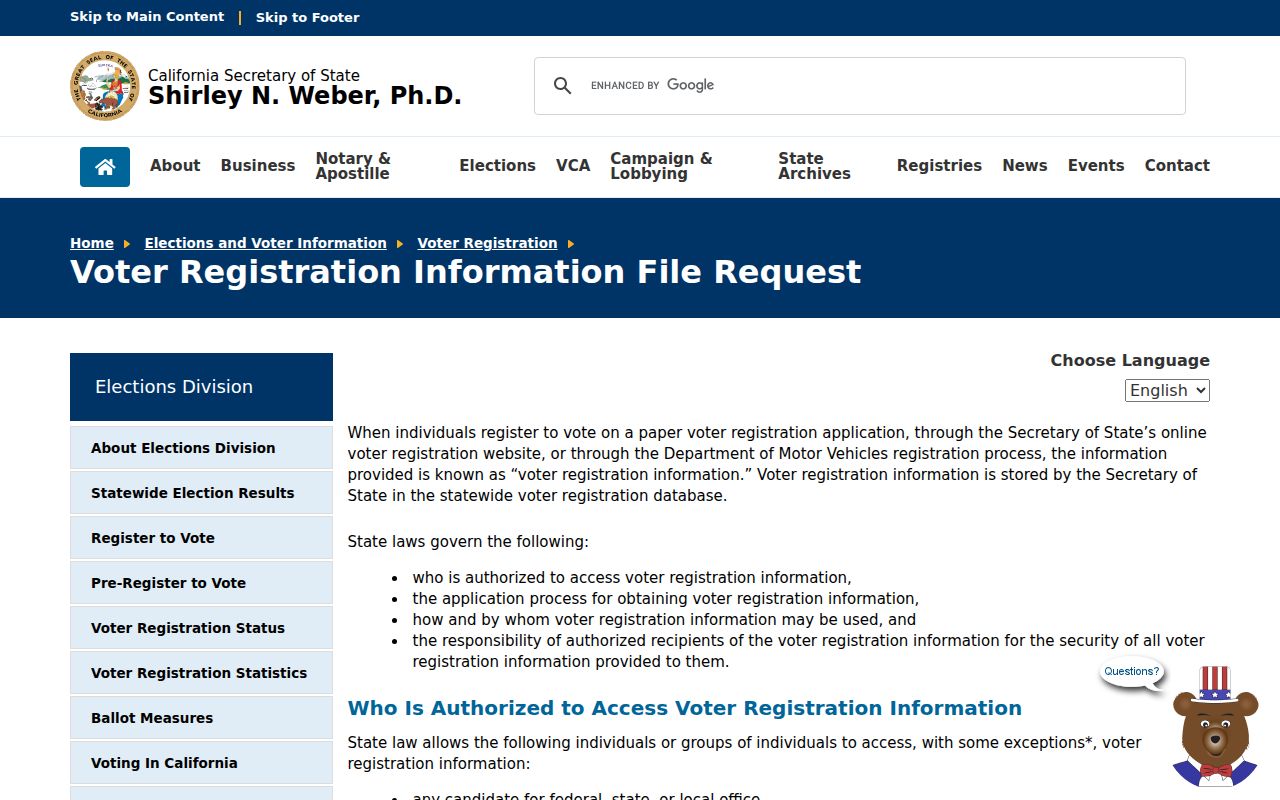
That page is the current checkpoint before an applicant mails the state form.
LA County Voter Records Route
Los Angeles County offers a narrower search for voter information at $5 per name. The request can be made in person at the Election Information Section or sent by mail. A mailed request must include the requester’s name, address, birth date, signature, telephone number, and a self-addressed stamped envelope.
| Request Route | Destination | Required Details |
|---|---|---|
| In person | Election Information Section, Room 2013 | Name to search and the $5 search fee |
| By mail | RR/CC, 12400 Imperial Hwy., Room 2013, Norwalk, CA 90650 | Requester details, signature, phone, and stamped return envelope |
| Personal status online | LA County verification portal | Last name, birthdate, house number, and ZIP |
The Registrar-Recorder/County Clerk division is the county custodian that routes these services. Its official county division page provides context for the office.
The county route is best when a self-lookup fails or when an approved request concerns a specific LA County voter.
Election records also include official notices, ballot-count updates, vote-center notices, incident notices, and certified results. LA County publishes those materials as dated election information. They answer civic questions about an election, but they do not expand access to confidential registration data.
Safe at Home Voter Privacy
California’s Safe at Home program gives qualifying participants a substitute mailing address and mail forwarding. Enrollment occurs through a designated enrolling agency, and application forms are not posted for direct submission. Participants should contact Safe at Home for confidential voter registration forms rather than use ordinary online registration or lookup paths. State and local agencies generally must accept the substitute address when creating or changing records where the law permits. The program does not erase public records that already exist, so it is an address-management system rather than a retroactive deletion service.
Separate Elections Code protections also address voters facing life-threatening circumstances and confidential elected officials or candidates. Sections 2166 and 2166.9 govern those mechanisms. A protected person should follow the official confidential process instead of testing an ordinary status screen with the substitute address.
The Safe at Home overview explains the substitute-address model.
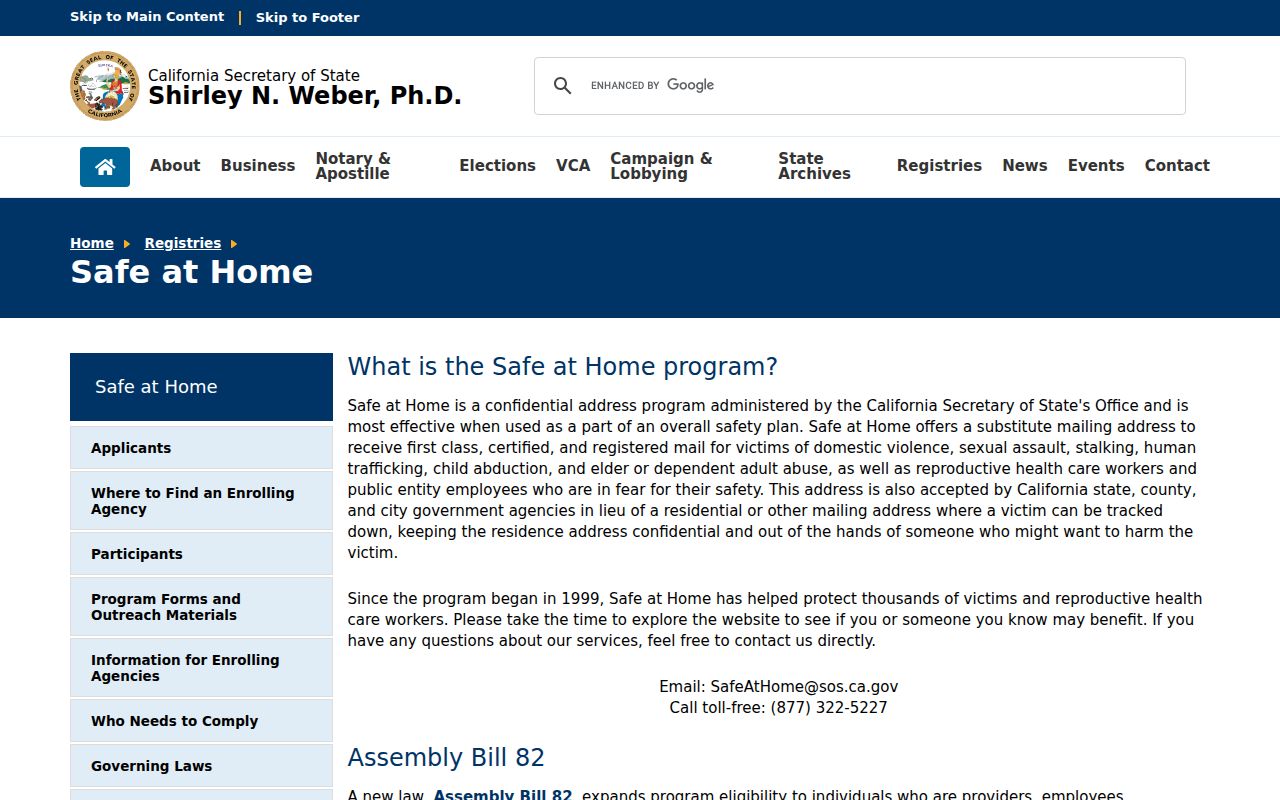
Its separate registration channel keeps a protected participant from exposing confidential information through the standard workflow.
South Pasadena Voter Roll Limits
The common myth is that a voter lookup works like a general people directory. It does not. The county and state status tools authenticate one voter, while access to a larger file depends on a permitted purpose and a signed certification. Elections Code § 2194 bars personal, private, or commercial use outside the approved statutory purposes.
Use only as certified. Do not republish restricted addresses, use voter data to harass anyone, or shift the file to an unstated purpose. Suspected misuse can be reported to the Secretary of State or Los Angeles County elections officials and may bring statutory penalties.
Security matters after release, too. An applicant accepts responsibility for the data and should limit access to the approved project. Ballot choices are always secret. A record of participation never reveals a person’s vote.
Note: A personal status result is not proof that every address or detail in a broader voter file may be shared.
Historic South Pasadena Voter Registers
Family historians should leave the current portals and use Great Registers. The California State Archives county and city records include historical voter registration registers. Los Angeles County Great Registers are also documented at the California State Library for 1866 through 1944, with 1866 through 1910 microfilm available through FamilySearch Centers.
Depending on the year, a Great Register may list a voter’s name, age, occupation, physical description, and naturalization notes. These are historical sources, not a substitute for current status. South Pasadena incorporated in 1888, and early residents may appear under Pasadena or broader Los Angeles County headings. The city’s boundaries were largely stable after 1889, which can help connect an old register entry to a later city directory or newspaper item.
South Pasadena Voter Access Channels
Choose the channel by purpose. Residents checking themselves can use LA County verification or My Voter Status. An eligible statewide data user follows the Secretary of State’s mail-only application. A specific LA County name search can go to the Norwalk counter or by mail with the required requester details and fee. Protected participants work through Safe at Home, while historical research belongs with Great Registers at archives and research centers.
For city-election questions, the South Pasadena City Clerk is the local bridge to county resources. For broader access-law procedure, the South Pasadena public records route explains how agency custodians handle ordinary government records. Voter files remain governed by their more specific election statutes.